
Take Back Your Crawl Space Before the Moisture Takes Your Floor Joists
Crawl space moisture control in Charlotte & Fort Mill that finds where water and humidity are getting in, seals them out, and keeps the space dry long after we leave. No quickies.
The floors feel soft in certain spots. There’s a musty smell that won’t go away no matter how many windows you open. Maybe a home inspector flagged standing water or mold during a sale, or you went down to check a pipe and found puddles, sagging insulation, and wood that gives when you press on it. Charlotte’s humidity doesn’t stay outside - it settles into your crawl space, soaks into floor joists, and feeds mold, wood rot, and the exact conditions termites need to move in. We install vapor barriers, full crawl space encapsulation systems, dehumidification, and drainage solutions across the Charlotte metro and into the Fort Mill and Rock Hill areas. Call or text and we’ll set up a time to come look.
Schedule Your Crawl Space Assessment
Why Crawl Space Moisture Gets Worse the Longer You Wait
A crawl space with a moisture problem doesn’t hold steady, it compounds. Bare dirt floors release water vapor constantly, and Charlotte’s warm, humid air gets pulled into the cooler crawl space through vents and foundation gaps, where it condenses on floor joists, subfloor panels, and ductwork. Over months, mold establishes itself, wood softens, and the structural members your house sits on start to weaken. Up to 50% of the air on your first floor comes from the crawl space below - carrying mold spores, musty odors, and allergens with it. And if moisture has been present long enough, subterranean termites will find it. A wet crawl space is their most common entry point into a home in the Carolinas.
What Happens to Your Crawl Space When We’re Done
Crawl space moisture has multiple causes, and a single fix rarely handles all of them. Here’s what each stage of the work means for your home.
You’ll know exactly what’s going on under your house before any money changes hands.
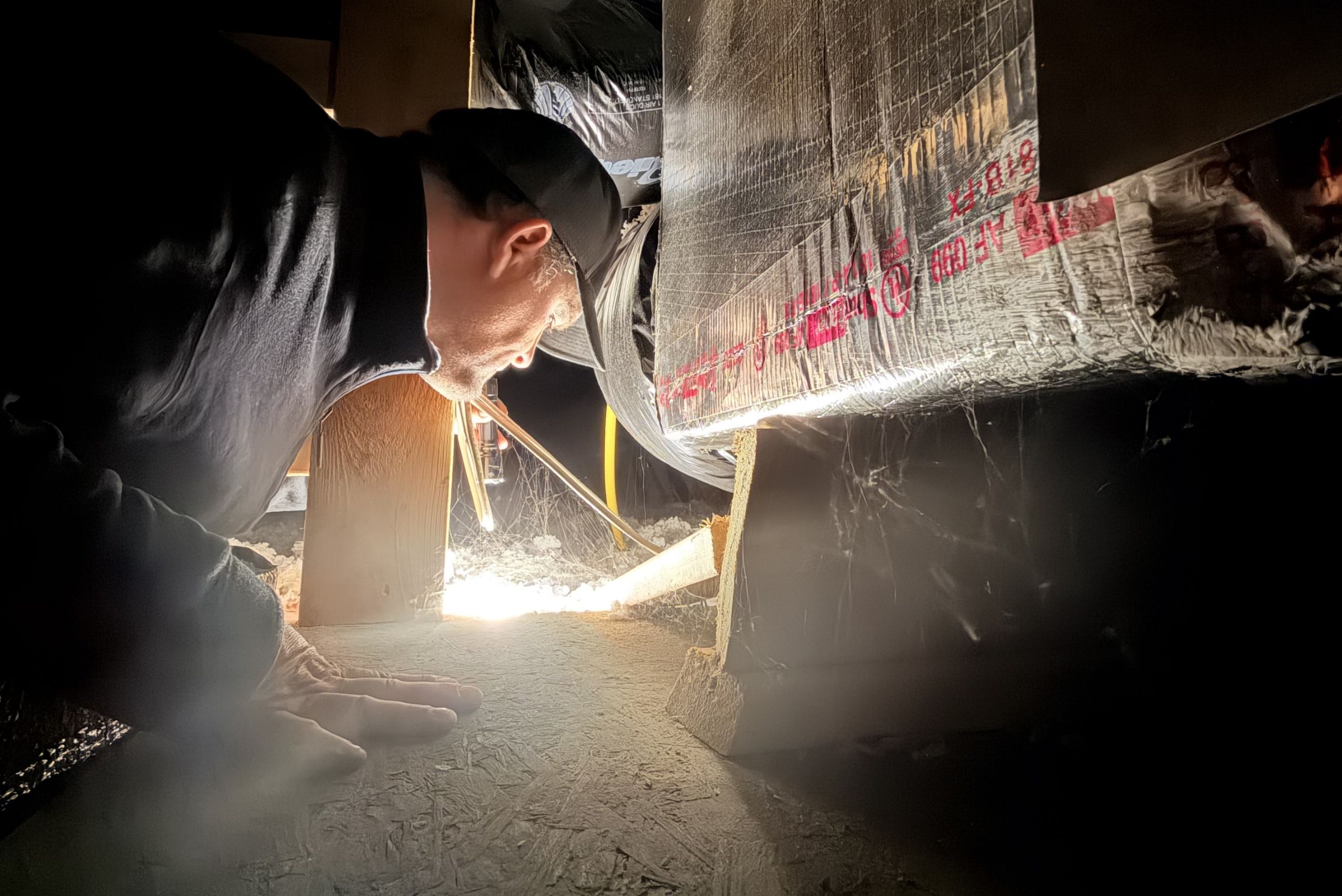
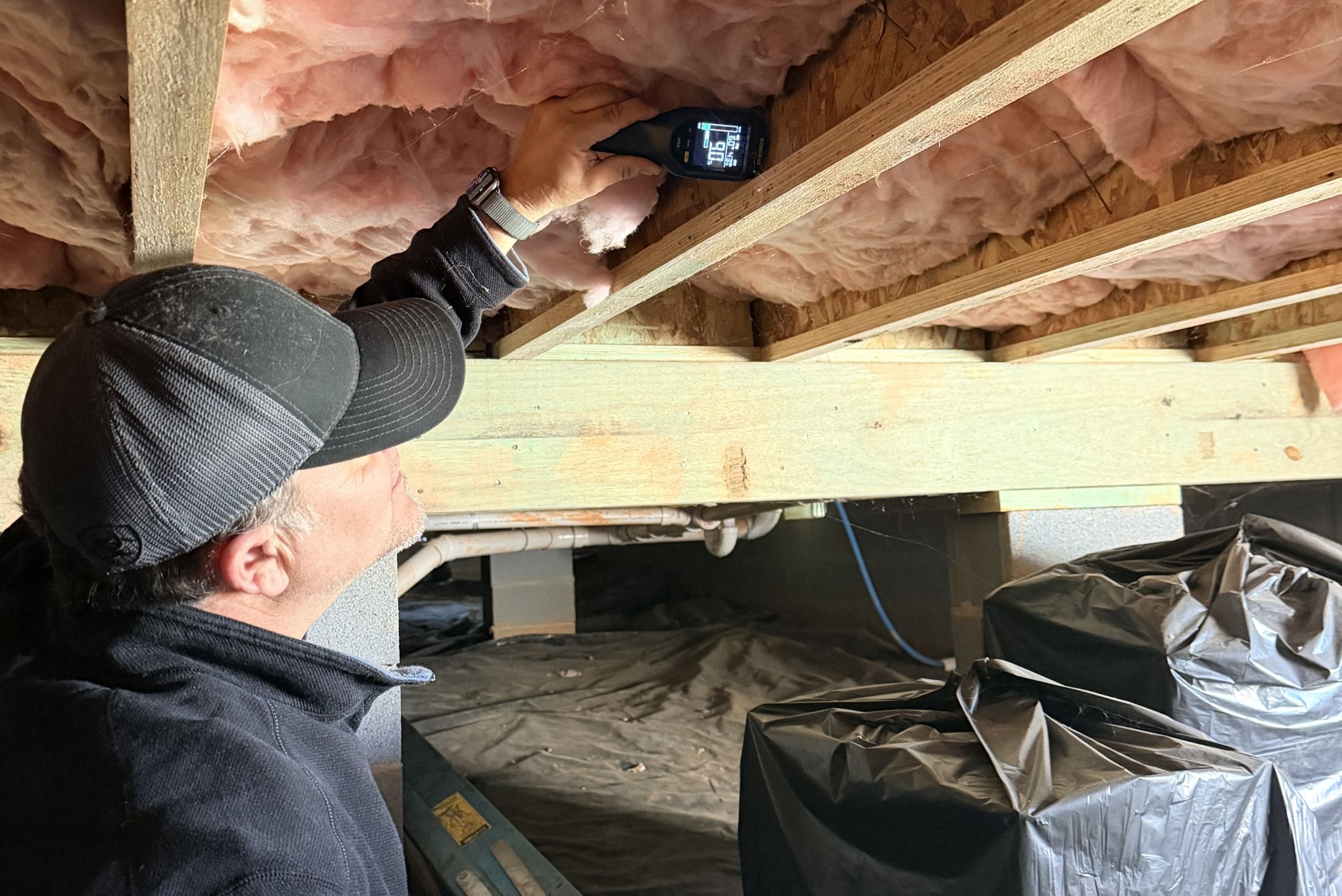
Before anything gets installed, we go under the house and check the full crawl space - the dirt floor for standing water and saturation, the foundation walls for cracks and seepage, the joists for mold and wood damage, and the existing ventilation to see whether it’s helping or making things worse. You’ll get a clear picture of what’s happening down there and what your options are - vapor barrier, full encapsulation, drainage work, or a combination - before any work starts.
Any water getting in gets dealt with first, so the rest of the work actually holds.
If water is entering through the foundation or pooling on the floor, that gets addressed before anything else goes down. This may include interior drainage channels, a sump pump system, or regrading recommendations for the exterior. No amount of vapor barrier or encapsulation lasts if bulk water is still finding its way in.
Your crawl space goes from open dirt to a sealed, dry environment.
For a standard vapor barrier, heavy-duty polyethylene sheeting goes over the dirt floor and fastens to the foundation walls, blocking ground moisture from evaporating into the space. For full encapsulation, the walls are sealed, the floor is completely covered, foundation vents are closed, and the space becomes a conditioned environment that stays dry year-round. Which approach fits depends on the assessment results and what the crawl space needs to stay dry long-term.
Humidity stays managed after we leave, not just the day of.
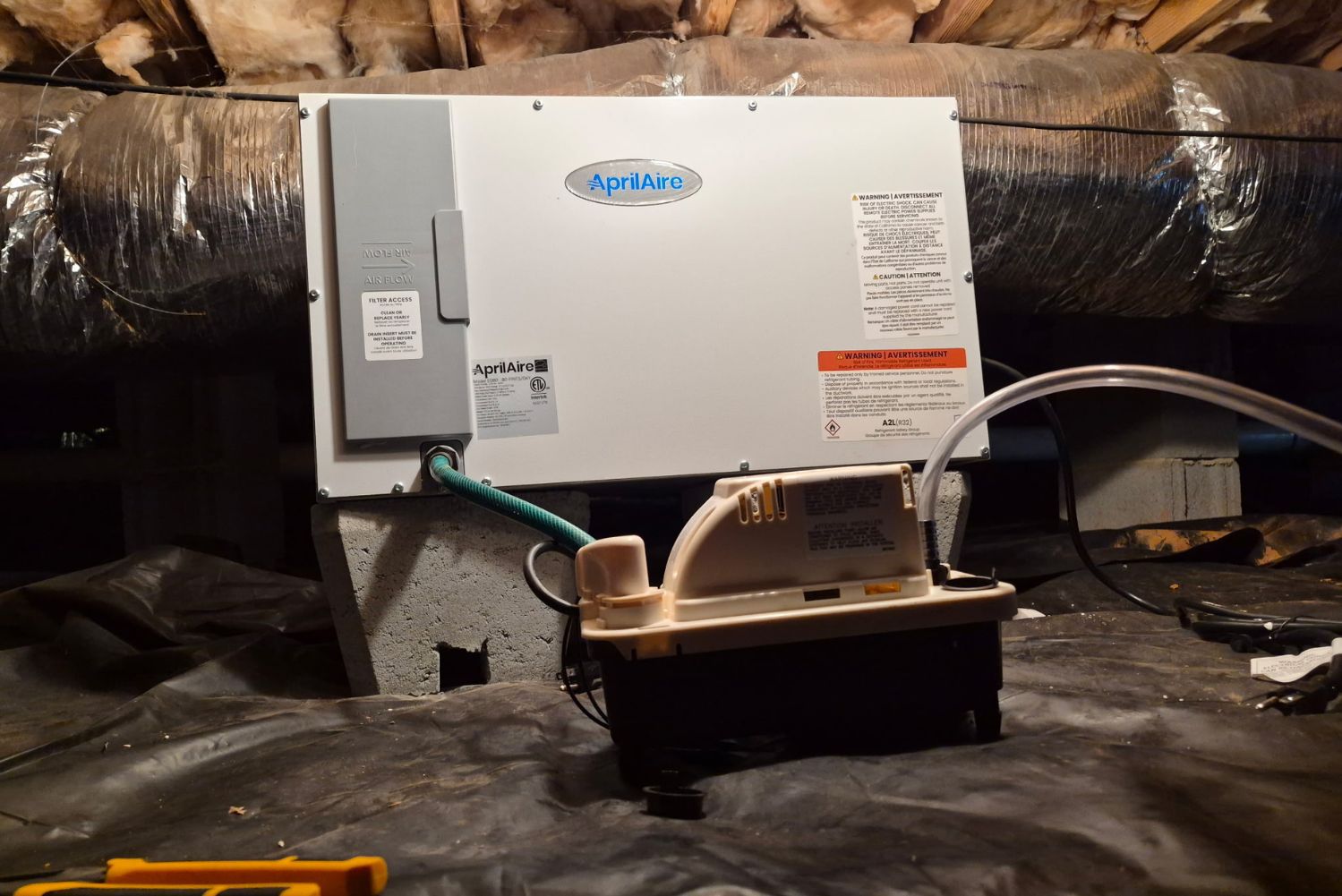
Sealing the space keeps ground moisture out, but the air inside still needs to be controlled. In most full encapsulations, a commercial-grade dehumidifier goes in, sized for the square footage of your crawl space. This keeps relative humidity below the threshold where mold grows, and wood deteriorates, typically around 55–60%. For vapor barrier installations where vents remain open, we’ll explain what humidity levels to watch for and what signs to look for going forward.
If the assessment turns up pest-related issues—termite activity, conducive conditions, or signs of wood-destroying insects—the moisture work can be paired with our termite or pest services. We’ll let you know what we find.
Why Homeowners in Charlotte and Fort Mill Hire Us for This Job
You’ll know exactly what was installed, where, and why.
When we’re finished, you get a walkthrough of everything that went in. If we spot issues outside the scope of the work - a joist that needs sistering, a dryer vent disconnected under the house, an old termite tube - you’ll know about it so you can address it on your terms.
Your crawl space gets the hours it takes, not the hours the schedule allows.
Encapsulations take time to measure, cut, seal, and finish properly. Your job gets the time it needs to be done right. We leave when the work is finished, not when the next appointment starts. No quickies.
You’ll hear what your crawl space actually needs, not the most expensive option.
Not every crawl space needs full encapsulation. Some need a vapor barrier. Some need drainage work first. You’ll get a clear explanation of what’s going on, what the options are, and what happens if you do nothing, so you can make an informed decision without pressure.
You get a real answer when you call, not a phone tree.
Call or text, and you reach someone who knows the service and can get you on the schedule. Not a call center reading a script. Not a recording that loops you through six menus before disconnecting. Not three transfers to get a straight answer about pricing or availability.
The materials are built to hold up for years, not just look clean on day one.
Heavy-duty vapor barriers and encapsulation materials rated for long-term crawl space use—not thin sheeting that rips the first time someone crawls over it. Seams are sealed, edges are fastened, and the install is done to last.
Schedule Your Crawl Space Assessment
What Charlotte & Rock Hill Homeowners Are Saying
Homeowners across Charlotte, Fort Mill, and Rock Hill share their experiences.
What Happens Before, During, and After Your Service
Before
Once you’re on the schedule, you’ll get a confirmation and a reminder the day before. You’ll know exactly when to expect us. We may ask a few questions ahead of time - whether you’ve noticed standing water, how long the musty smell has been present, whether you’ve had any previous work done under the house - so we can come prepared.
During
You’ll need to be home since we need access to the crawl space entry point and may need to move through interior spaces. Our team starts with a full crawl space assessment to confirm conditions, then begins installation. Plan for about half a day unless we’ve noted otherwise beforehand. If you want to know what we’re finding, just ask - we’ll walk you through it.
After
When the work is done, we’ll show you what was installed and explain how it works. For encapsulations with a dehumidifier, we’ll set it up, confirm it’s running, and walk you through the settings. If you notice anything that seems off after we leave - a seam that pulled loose, humidity readings climbing, anything - call or text and we’ll come back and take a look.

Crawl Space Moisture Control
Frequently Asked Questions
How do I know if my crawl space has a moisture problem?
Common signs include musty odors on the first floor, soft or bouncy spots in the flooring, visible mold on floor joists, condensation on ductwork, increased allergy symptoms indoors, and doors or windows that stick seasonally. If a home inspector or termite technician flagged moisture, mold, or wood damage, that’s a strong indicator. Not sure? Call or text us a description of what you’re noticing and we can usually tell you whether it’s worth taking a look.
Will this fix my mold problem?
Sealing the crawl space and controlling humidity removes the conditions that allow mold to grow. Existing mold on wood surfaces may need to be treated separately depending on the extent. We’ll let you know what we’re seeing during the assessment and whether additional remediation is needed before or alongside the moisture control work.
Is crawl space encapsulation worth it?
If your crawl space has ongoing moisture, visible mold, soft wood, or has already attracted termites, the cost of encapsulation is typically far less than the cost of the structural and health problems moisture causes over time. It also reduces the load on your HVAC system in summer, since the crawl space is no longer pumping humid air into the house. For many homeowners, the decision comes down to whether the current damage is already bad enough to act on or whether they’re trying to prevent it from getting there.
What’s the difference between a vapor barrier and full encapsulation?
A vapor barrier is heavy-duty sheeting laid over the dirt floor to block ground moisture from evaporating into the crawl space. It’s effective for moderate moisture issues. Full encapsulation goes further - the walls are sealed, foundation vents are closed, the entire floor and wall surface is covered, and a dehumidifier is installed to actively manage humidity. Encapsulation turns the crawl space into a conditioned environment and is the more comprehensive solution for persistent or severe moisture problems.
How long does installation take?
A standard vapor barrier install typically takes a few hours. Full encapsulation -including wall sealing, vent closure, and dehumidifier setup - usually takes about half a day. Crawl space size, accessibility, and existing conditions all affect timing. We’ll give you a realistic time estimate before we start.
Does this help with termites?
oisture control removes one of the primary conditions subterranean termites need to establish colonies near your home. It’s not a termite treatment on its own, but it makes your crawl space significantly less attractive to them. If we find termite activity or damage during the assessment, we’ll flag it and can pair the moisture work with our termite control services.
Don't Be Shy
Let Us Know What You Need
Serving Charlotte, Fort Mill, Rock Hill & Surrounding Communities
We operate out of two offices to cover the greater Charlotte metro and surrounding areas in both Carolinas.

Charlotte, NC
8809 Lenox Pointe Dr Ste A Charlotte, NC 28273
(704) 499-9373

Fort Mill, SC
100 Main St, Suite 201-A, Fort Mill, SC 29715
(803) 868-9229
Our service area includes Mecklenburg County, Union County, York County, and Lancaster County - covering Ballantyne, Huntersville, Waxhaw, Mint Hill, Matthews, Indian Land, Tega Cay, Lake Wylie, Rock Hill, and the communities in between.