

Take Your Bed Back and Sleep Soundly Again
Bed bug treatment in Charlotte & Fort Mill that covers every hiding spot - mattress seams, baseboards, furniture - and includes a follow-up visit to confirm they're gone.
You're not sleeping. Not really. You're lying there wondering if that itch is another bite or just your mind playing tricks. Bed bugs turn your own bed into something you dread, and they're almost impossible to get rid of - they hide in mattress seams, baseboards, headboard joints, and furniture cracks, coming out only when you're still. We treat every spot they use, not just the mattress, and come back to confirm they're gone. You stop dreading bedtime.
Schedule Bed Bug Treatment
Why Bed Bugs Are So Hard to Get Rid of Once They're In
Bed bugs hide during the day in cracks thinner than a credit card - inside outlet covers, behind baseboards, in box spring folds, along headboard joints. They only come out at night to feed, then retreat back into hiding. And they reproduce fast. A single female can lay hundreds of eggs over her lifetime, and those eggs hatch in about 10 days. Kill the adults but miss what hasn't hatched yet, and you've got a fresh generation emerging just when you thought it was over.
Stop Losing Sleep and Start Reclaiming Your Bedroom
Bed bugs hide in specific places, and that's actually good news - it means we know where to look and exactly where to treat. No guessing, no blanket spraying and hoping for the best.
Step 1: We Find Out Where They're Actually Living
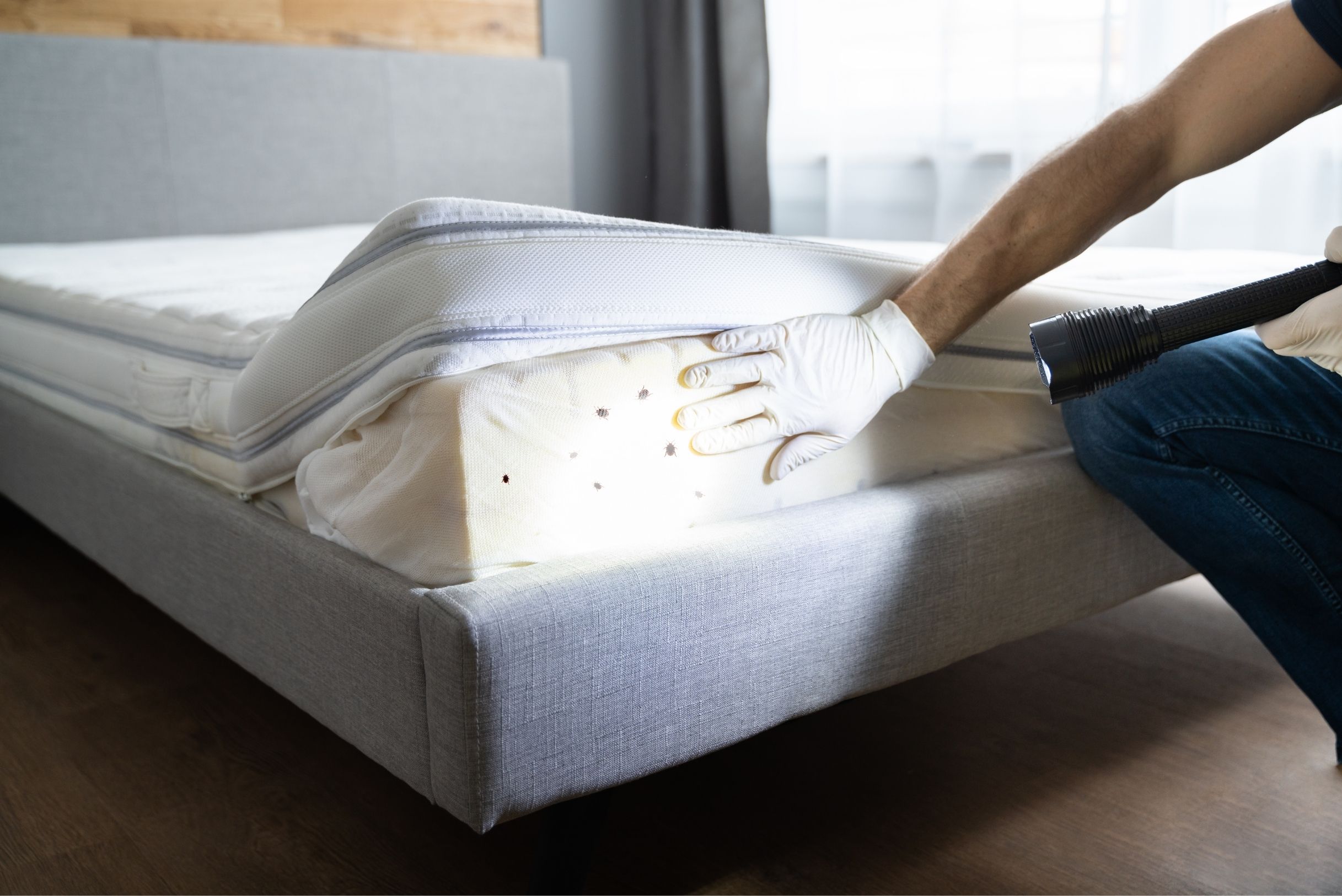
We examine the affected rooms to determine how far the infestation has spread. Bed bugs leave signs - small dark spots on sheets, shed skins along mattress seams, live bugs tucked into headboard joints. We check the bed, furniture, baseboards, outlet covers, and anywhere else they like to hide. This tells us exactly what we're dealing with and shapes everything that follows.
Step 2: Treatment Goes Directly Where the Bugs Are
Once we know their hiding spots, we apply treatment to those specific areas. Mattress seams and tufts. Box spring folds. Bed frame joints. Headboard crevices. Baseboards. Outlet covers. Furniture legs. Any cracks or voids where they've set up shop. This isn't a quick mist-the-room situation, it's methodical, thorough, and (we won't lie) takes a while. No quickies.
Step 3: We Come Back to Catch What Hatched
Treatment doesn't kill bed bug eggs, and those eggs hatch in 7–10 days. We schedule a follow-up visit to catch newly hatched bugs before they mature and start the cycle over. If you're still seeing activity after that, we come back until you're not.
What Actually Changes When You Work With a Local Team
You know what's happening in your own home.
We'll tell you exactly which areas we're treating, what we're finding, and what to expect over the next couple weeks. If you've got questions mid-service, ask. You shouldn't have to wonder what just got sprayed on your mattress.
Your appointment doesn't feel like a drive-by.
Bed bugs hide in dozens of spots throughout a room, treating them properly takes time. We're not trying to hit 20 stops a day. We're trying to solve your problem. That means we stay until the job is actually done, not until the clock says we should leave.
If they come back, so do we.
The follow-up visit is built into the service. If you're still seeing activity after that, call us. We don't consider the job done until you're sleeping through the night again.
You talk to a real person who can actually help you.
Call or text and you reach someone local. Not a call center reading a script. Not a recording that loops you through six menus before disconnecting. Someone who knows the area, knows the service, and can get you on the schedule without transferring you three times.
The products work on bugs, not your family.
Everything we apply is selected to be effective on bed bugs while being safe around kids and pets once it dries. You'll stay out of treated rooms for about 30 minutes, and then you're good.
What Charlotte & Rock Hill Homeowners Are Saying
Homeowners across Charlotte, Fort Mill, and Rock Hill share their experiences.
What Happens Before, During, and After Your Service
Before
Once you're on the schedule, you'll get a confirmation and a reminder the day before. No vague "we'll be there sometime this week" nonsense, you'll know exactly when to expect us. We'll also send prep instructions: wash bedding on high heat, clear items away from baseboards, and reduce clutter in the affected rooms. Proper prep makes treatment more effective, and we'll explain why each step matters.
During
You'll need to be home since we're working inside. Our technician examines the infested areas first to confirm where bed bugs are hiding, then treats those spots directly. Plan for 1–2 hours, depending on how many rooms are affected and how established the infestation is. Want to know what we're finding? Just ask, we'll walk you through it as we go.
After
Stay out of treated areas for about 30 minutes while the treatment dries. Don't vacuum treated surfaces for at least two weeks, the residual product continues working on bugs that emerge from cracks. You may still see some activity in the first few days as bugs emerge from hiding and come into contact with the treatment. That's normal and actually means it's working. We'll schedule your follow-up visit before we leave, typically 10–14 days out.

Bed Bug Treatment
Frequently Asked Questions
How do I know if I have bed bugs?
Look for small reddish-brown bugs about the size of an apple seed, tiny dark spots on sheets or mattress seams (their droppings), and shed skins near hiding spots. Bites often appear in clusters or lines on skin that was exposed while sleeping. Not sure what you're looking at? Send us a photo or schedule an appointment, we can tell you pretty quickly.
How did I even get bed bugs?
They hitchhike. They climb into luggage at hotels, hide in used furniture, or travel on clothing from infested spaces. Having bed bugs has nothing to do with cleanliness, it's purely about exposure. They're just really, really good at finding new hosts.
Why do I need a follow-up visit?
Treatment doesn't kill bed bug eggs, and those eggs hatch in 7–10 days. The first visit handles adults and nymphs. The follow-up catches anything that hatched before they can reproduce. Skipping it is exactly how infestations come back.
Do I need to throw away my mattress?
Almost never. Most infestations can be treated without replacing furniture. If yours is severe enough that replacement makes more sense, we'll tell you - but that's the exception, not the rule.
How long until I stop getting bitten?
Most people notice a significant drop within a few days as the active population dies off. After the follow-up visit, bites should stop completely. If they don't, call us - we'll come back and figure out what changed.
Can bed bugs spread to other rooms?
Yes, and they will if you wait. They'll move to couches, recliners, guest bedrooms - anywhere people sit or sleep for extended periods. The longer the infestation goes untreated, the more territory we need to cover.
Ready to Get Started? Tell Us What You're Dealing With.
Fill out the form and someone from our team will follow up to answer your questions and get you on the schedule.
Serving Charlotte, Fort Mill, Rock Hill & Surrounding Communities
We operate out of two offices to cover the greater Charlotte metro and surrounding areas in both Carolinas.

Charlotte, NC
8809 Lenox Pointe Dr Ste A Charlotte, NC 28273
(704) 499-9373

Fort Mill, SC
100 Main St, Suite 201-A, Fort Mill, SC 29715
(803) 868-9229
Our service area includes Mecklenburg County, Union County, York County, and Lancaster County - covering Ballantyne, Huntersville, Waxhaw, Mint Hill, Matthews, Indian Land, Tega Cay, Lake Wylie, Rock Hill, and the communities in between.