
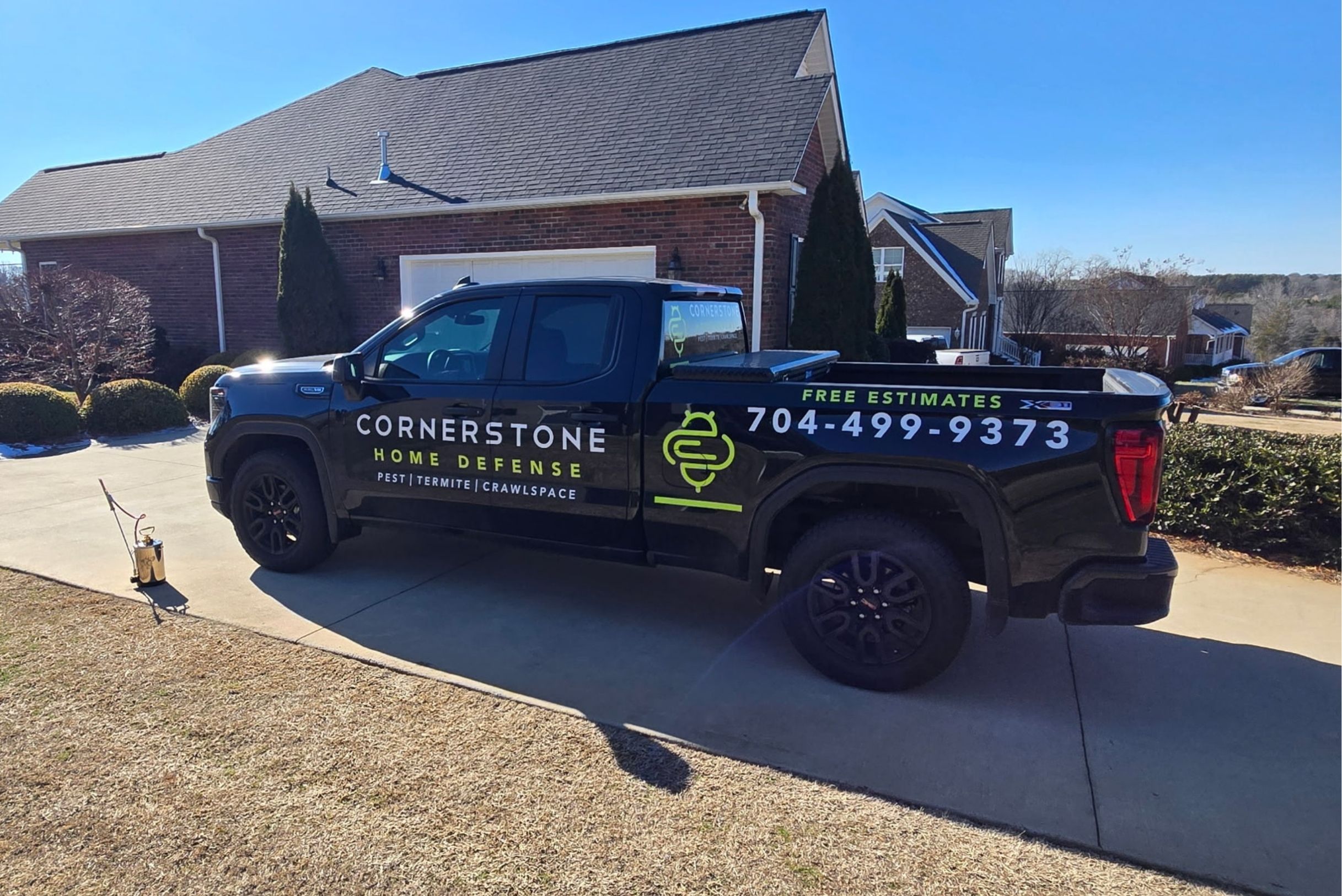
Get Mice and Rats Out of Your Home
Charlotte & Fort Mill rodent control that starts inside your home: finding where they're nesting, what species you're dealing with, and what it takes to get rid of them.
You heard something in the wall last night. Or you found droppings under the kitchen sink and aren't sure how long they've been there. Either way, the problem is already bigger than what you're seeing. Rodents nest behind walls, under insulation, and inside cabinets: anywhere they can reach food and shelter without being disturbed. By the time you notice droppings or hear scratching, there's an active population using your home. We come inside, find where they're nesting, and put a targeted plan in place to clear them out.
Get Started with Rodent Control
What's Actually Happening Behind Your Walls
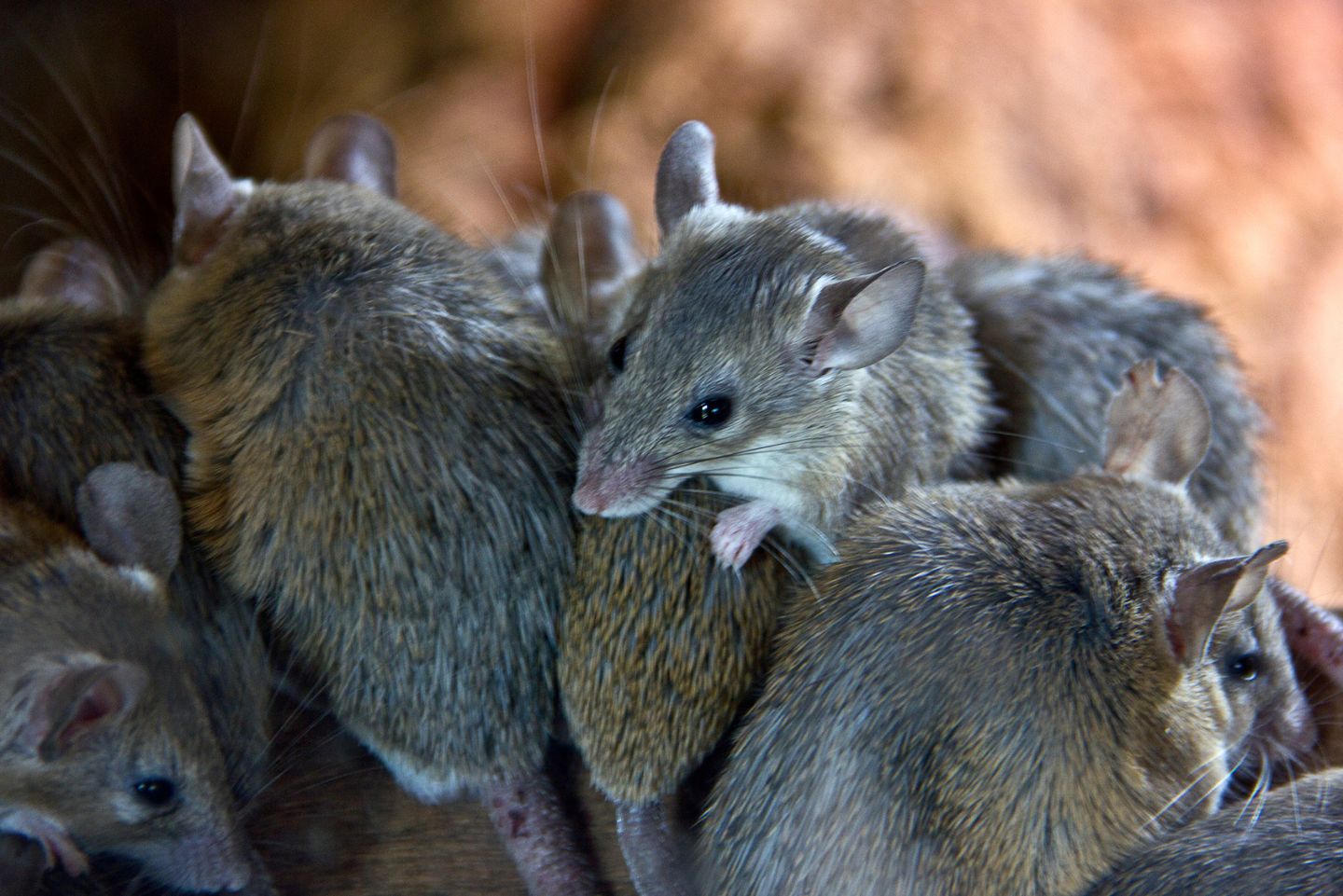
Rodents don't move into your home one at a time. Once one finds an opening, and a mouse only needs a gap the size of a dime, it leaves scent trails that lead others straight to the same access point. A single pair of mice can produce up to 60 offspring in a year, all of them nesting in your walls, attic, or crawl space.
They gnaw through wiring, contaminate insulation with droppings, and cause damage that compounds the longer they go unchecked. And because they're nocturnal and nest in places you rarely look, most homeowners don't realize the scope of the problem until the signs, sounds in the walls, droppings in cabinets, chewed packaging, become impossible to ignore. By that point, you're not dealing with a mouse. You're dealing with a colony.

How We Get Rodents Out of Your Home
Step 1: We Start by Identifying What You're Dealing With
Before anything gets placed or applied, we walk through your home looking for signs that tell us what's going on: droppings, gnaw marks, grease trails along baseboards, nesting material in hidden areas. We check the attic, crawl space, garage, kitchen, and anywhere rodents are likely to travel or settle. What we find determines the treatment approach, because mice and rats behave differently, nest in different places, and respond to different methods.
Step 2: Your Home Gets Treated with the Right Approach for the Problem
Based on what the walkthrough turns up, we place traps and bait stations in the areas where rodent activity is highest: behind appliances, along walls where they travel, inside cabinets, and in attic or crawl space access areas. Placement matters more than quantity. A dozen traps in the wrong spots won't outperform a few in the right ones. Where we find accessible gaps or openings that rodents are using, we address those too, but the priority is targeting the population that's already inside.
Step 3: We Come Back to Make Sure They're Gone
Rodent control isn't a one-visit fix. We schedule a follow-up to check traps, look for new signs of activity, and confirm the population is dropping. If activity continues, we adjust: different placement, different method, whatever the situation calls for. You're not paying for a single visit and hoping it worked. You're getting a process that adapts until the problem is resolved.
The Difference Between Treating Rodents and Getting Rid of Them
Your rodent problem gets worked until it's gone, not just treated once.
Follow-up visits are built into the service. We come back, check what we placed, and adjust the approach if activity continues. If rodents show up between visits, call or text, and we'll get back out. You're paying for a result, not a single appointment and a hope that it holds.
One call gets you a real answer, not a phone tree.
Call or text, and you reach someone local who can answer your question, pull up your property details, and book your appointment in one conversation. No transfers, no hold music, no explaining your situation three times before someone can actually help.
Your kids and pets stay out of harm's way throughout treatment.
Every trap and bait station is placed in a location that's difficult for children and pets to reach: behind appliances, inside wall voids, in crawl spaces, and attics. We walk you through what was placed and where, so there are no surprises in your home after we leave.
You find out what's happening at your property, not just that someone stopped by.
After the walkthrough, we tell you what we found, where the activity is concentrated, and what the treatment plan looks like. You'll know what to watch for between visits and when we're coming back. If something changes before then, one call gets it handled.
What Charlotte & Rock Hill Homeowners Are Saying
Homeowners across Rock Hill, Fort Mill, and the surrounding York County communities share their experiences.
What Happens Before, During, and After Your Service
Before
Once your appointment is set, you'll get a confirmation and a reminder the day before. You'll know exactly when we're coming. If you need to reschedule, just call or text.
During
Someone will need to be home so we can access the interior. Our technician walks through your home, checks for signs of activity, and places traps and bait stations where they'll be most effective. Expect 45–60 minutes, depending on your home's size and the scope of the issue. If you want to know what we found, we'll walk you through it.
After
Leave traps and bait stations in place, moving them reduces effectiveness. You may hear increased activity in the first day or two as rodents encounter the stations. If you notice new droppings or activity in previously quiet areas, let us know. We'll schedule your follow-up visit to check traps, assess progress, and adjust the plan if needed. If something comes up before that visit, call or text, and we'll get it handled.

Rodent Control
Frequently Asked Questions
How do I know if I have mice or rats?
Droppings are the easiest tell. Mouse droppings are small, about the size of a grain of rice. Rat droppings are significantly larger, roughly the size of a raisin. You might also hear scratching or scurrying in walls or ceilings, find gnaw marks on food packaging or wiring, or notice a musty smell in enclosed spaces. We identify the species during the initial walkthrough because mice and rats respond to different treatment methods.
Is this safe for my pets?
Yes. Traps and bait stations are placed in locations that are difficult for pets and children to reach: behind appliances, inside wall voids, in attics, and crawl spaces. We'll let you know exactly where everything is placed so you can keep an eye on those areas.
How many visits does it take?
It depends on the severity of the issue. Most rodent problems require an initial service and at least one follow-up. More established infestations may need additional visits. We monitor progress at each follow-up and adjust the plan based on what we're seeing.
Do I need to be home?
Yes. Rodent treatment requires full interior access: attic, crawl space, kitchen, bathrooms, and anywhere else activity has been found. If you can't be there, let us know in advance, and we can discuss options.
What if rodents come back after treatment?
Call or text us. If activity returns after your service, we'll come back and reassess. That may mean adjusting trap placement, adding stations in new areas, or looking at whether new access points have opened up.
Do you seal entry points?
Where we find accessible gaps or openings during your service, we'll address them. Rodents can get through very small spaces, so complete exclusion isn't always realistic in a single visit, but closing off the obvious access points helps reduce new activity between treatments. [EXCLUSION SCOPE — CONFIRM WITH JOSH: Does Cornerstone handle full exclusion work, or is it limited to accessible gaps found during the service visit?]
Will I still hear rodents after the first visit?
It's possible. Rodents that have already nested inside your walls or attic won't disappear overnight. You may hear activity for a few days as they encounter traps and bait stations. If activity hasn't decreased within a week, call us, and we'll move up your follow-up visit.
Ready to Get Started? Tell Us What You're Dealing With.
Fill out the form and someone from our team will follow up to answer your questions and get you on the schedule.
Serving Charlotte, Fort Mill, Rock Hill & Surrounding Communities
We operate out of two offices to cover the greater Charlotte metro and surrounding areas in both Carolinas.

Charlotte, NC
8809 Lenox Pointe Dr Ste A Charlotte, NC 28273
(704) 499-9373

Fort Mill, SC
100 Main St, Suite 201-A, Fort Mill, SC 29715
(803) 868-9229
Our service area includes Mecklenburg County, Union County, York County, and Lancaster County - covering Ballantyne, Huntersville, Waxhaw, Mint Hill, Matthews, Indian Land, Tega Cay, Lake Wylie, Rock Hill, and the communities in between.